Do we need a top table?
No. Some couples choose a top table and others don't. You might sit with your families or wedding party, at a small table for two, or at a table among your friends.
If a top table would cause more worry than it is worth, for example with separated parents, leaving it out is a perfectly good option.
Who sits at the top table?
That is your choice. You might seat parents, step-parents, the wedding party and their partners there, or keep it to just the two of you.
Talk it through with both families before you decide, so nobody is surprised on the day. Then set the number of seats to match the people you have chosen.
How should we seat families and friends?
Things to discuss as you go:
- Keep each family group together at one table, or mix the two families so they get to know each other.
- Seat friends who know each other together, so nobody is left among strangers.
- Put guests who need easy access, such as older relatives or anyone with a pram, near the door or close to the toilets.
- Seat guests with children together, if that helps them.
None of these is a rule. Choose what suits your guests and your venue.
What if some guests should not sit together?
Make a short, private list of people or groups to keep apart. You don't need to give a reason, and nobody else needs to see it.
Check the list again after any late changes, such as a new plus one, as a single swap can bring two people together.
How do we turn our choices into a table plan?
Ask your venue how many people each table seats. Add your guests, mark who goes on the top table if you have one, set up your groups and the people to keep apart, then let the plan fill the tables. Move anyone you like afterwards.
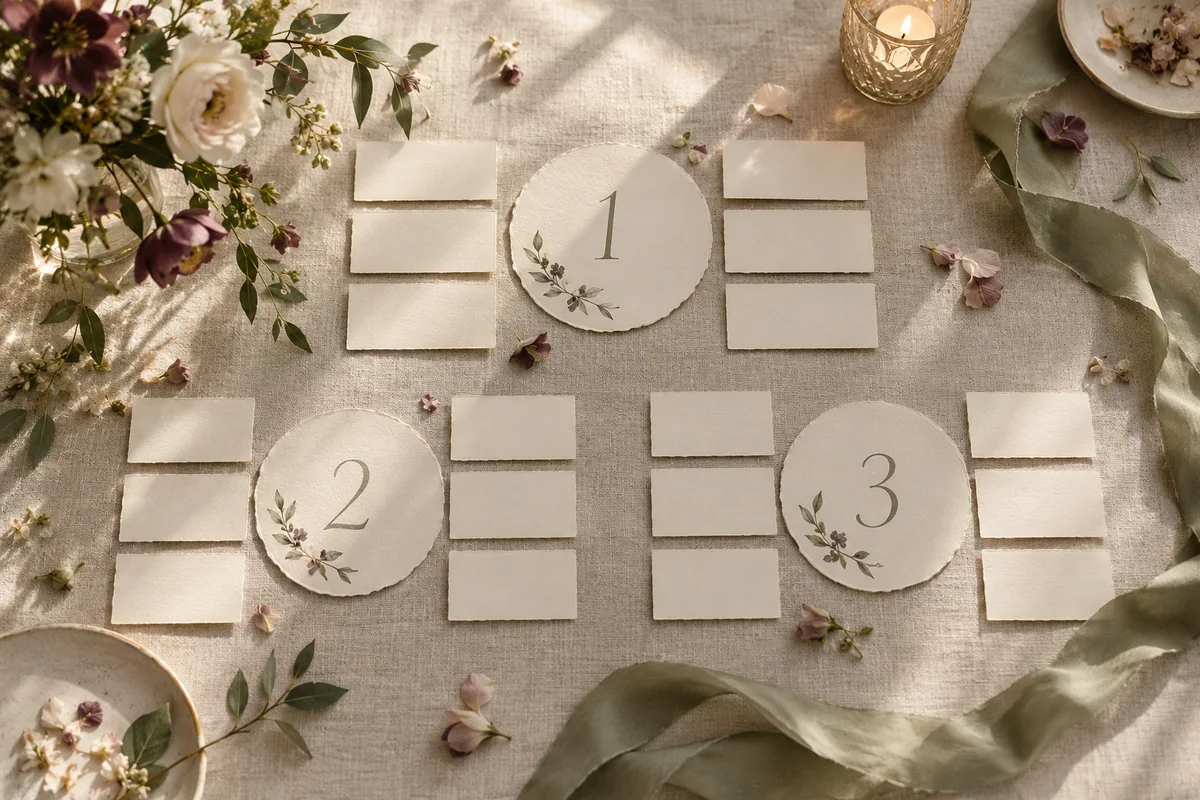
Print the plan with one block per table for the venue, and an A to Z list of guests and tables for your place cards.
SOURCES
Official sources
This guide uses the tool's own method and your own figures. It has no outside facts, so there are no sources to list.